You’ve opened a blank document. The cursor is blinking. And the only thing going through your head is: how do I write a resume when I don’t have any real experience to put on it?
Take a breath. Every single person who has ever held a job started exactly where you’re standing right now. A first resume isn’t a summary of your career , it’s a snapshot of your potential, backed by everything you’ve already done: your coursework, your projects, your internship, that part-time gig, even the clubs you ran on weekends. All of it counts, and all of it belongs here.
This guide answers the how do I write a resume question step by step, building it from scratch, one section at a time, so you’re not staring at that blank page for long.
Why a “No Experience” Resume Isn’t a Handicap
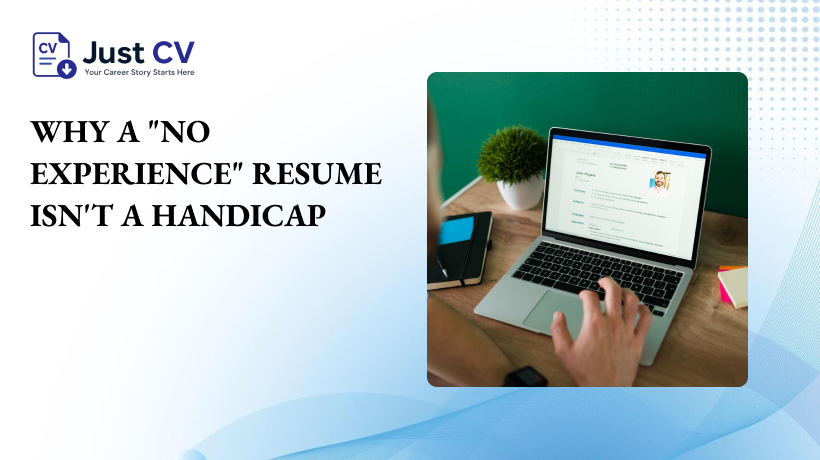
Recruiters hiring for entry-level roles and internships already expect a shorter work history. They’re not reading your resume looking for ten years of job titles, they’re looking for signs that you can learn fast, show up reliably, and communicate clearly. Career experts consistently point out that for entry-level hiring, relevant skills often matter more to recruiters than a long job history when they’re deciding who gets an interview.
So instead of thinking of your resume as thin, think of it as focused. Every line you write should answer one question for the recruiter: can this person do the job? You just have different kinds of proof than someone ten years into their career and that’s completely normal. It’s also exactly why a resume for freshers is built a little differently than one for someone with a decade of job titles behind them: the structure leans harder on education, projects, and transferable skills instead of a long work history.
Step 1: How to Start a Resume – Contact Information First
If you’re wondering how to start a resume from a completely blank page, begin here it’s the easiest section, so knock it out first and build some momentum. At the top of the page, include:
- Full name
- Phone number
- Professional email address (skip the nickname you made in middle school go with something like firstname.lastname@gmail.com)
- City and state
- LinkedIn profile (optional, but worth adding if it’s filled out)
- Portfolio or personal website link, if relevant to the role
Keep this section clean and skip anything unnecessary like your full home address or a photo most employers in the US and Canada don’t expect or want either.
Step 2: Write a Short Summary That Sells Your Direction
Right under your contact details, add a 2–4 sentence summary. Think of it as your elevator pitch: who you are, what you’re good at, and what kind of role you’re chasing.
A strong summary usually mentions your field of study or focus, one or two standout skills, and a touch of enthusiasm for the specific type of role. It shouldn’t sound like a list of adjectives it should sound like a real sentence a real person would say out loud.
Example summary for a marketing internship applicant:
Communications student with hands-on experience managing social content for a student organization of 400+ members. Comfortable with Canva, basic analytics, and short-form copywriting. Looking to bring that same energy to a brand marketing internship this summer.
Notice there’s no work history mentioned at all and it still reads like someone worth interviewing.
Step 3: Lead With Education (It’s More Powerful Than You Think)
If you’ve been asking yourself how can I make a resume when you’ve never held a real job, this is where the answer really starts. When you don’t have much paid work experience, your education section becomes one of your strongest selling points not a placeholder. Put it near the top of the page, above or right after your summary.
Include:
- Degree or program name
- School name and expected/actual graduation date
- GPA (if it’s 3.0 or above)
- Relevant coursework
- Academic honors, scholarships, or Dean’s List mentions
- Clubs, societies, or leadership roles
If you led a study group, organized a fundraiser, or built something for a class project, this is the place to say so. These details show initiative which is exactly what a hiring manager is trying to measure when they can’t check your last performance review.
Step 4: Add the Right Skills for the Job
Open the job posting in one tab and your resume in another. Highlight every skill the posting mentions, then check which ones you genuinely have. Your skills section should include a balanced mix of:
- Hard skills– things you learned through a class, certification, or hands-on practice (Excel, Python, Adobe Photoshop, a second language)
- Soft skills– communication, time management, teamwork, problem-solving
A quick note here: soft skills aren’t filler. For entry-level hiring, they often carry just as much weight as the technical stuff, because employers know they can teach you their specific software they can’t as easily teach you how to show up on time or work well with a team.
Keep this section short and specific. A list of 8–10 skills that genuinely match the role beats a list of 20 generic ones.
Step 5: Add Projects, Internships, and Any Hands-On Work Here’s the Thing That Counts
This is where most first-time resume writers freeze up, because this section is usually called “Work Experience” and that word “work” makes people think it only counts if someone paid them a salary. It doesn’t.
Internships, class projects, freelance gigs, volunteer shifts, and even well-run personal projects all belong here, and they’re read the same way a job history would be. If you built a small app, ran a campus club’s Instagram, tutored younger students, or managed a fundraiser, write it up exactly like you would a job.
For each entry, include:
- Your role or title
- The organization, club, or project name
- Dates involved
- 2–4 bullet points describing what you did and what came of it
A Before-and-After Example
Here’s how a vague line turns into one that actually sells your skills:
Before:
Helped organize events for the school’s business club.
After:
Coordinated logistics for 3 campus networking events (50–120 attendees each), managing vendor communication, budgets under $500, and same-day setup resulting in a 30% jump in club membership the following semester.
The second version gives a recruiter something to picture: scale, ownership, and an actual result. Whenever you can, swap a vague verb (“helped,” “worked on”) for a specific action (“coordinated,” “built,” “managed”) and follow it with a number, even a rough one.
Step 6: Choose a Clean Format and Proofread Like It’s a Final Exam
Once your sections are drafted, format them consistently:
- Use one font throughout (something simple like Calibri, Arial, or Georgia)
- Keep it to one page
- Use consistent bullet styles and spacing across every section
- Save it as a PDF unless the application specifically asks for a Word doc
- Name the file professionally “FirstnameLastname_Resume.pdf,” not “Resume_final_v3_actually_final.pdf”
Then proofread it. Read it out loud. Ask a friend, a professor, or your school’s career center to look it over a second set of eyes almost always catches something you missed. A polished resume with no typos does more for your credibility than any single bullet point can.
Common First Resume Mistakes to Avoid
Once your draft is in place, run it past this quick list. These are the mistakes that show up most often on a first resume and they’re easy to fix once you know to look for them.
1.Trying to cover every job or club you’ve ever had.
More isn’t better here. A recruiter skimming your resume in under a minute needs the strongest three or four entries, not a complete autobiography. If something doesn’t connect to the role you’re applying for, it’s usually safe to trim it or shrink it to one line.
2. Writing duties instead of results.
“Responsible for social media” tells a recruiter what your job was, not whether you were any good at it. Wherever you can, follow up a duty with what came of it a number, a change, an outcome. Even something as simple as “posted three times a week, growing followers from 200 to 600” turns a flat line into evidence.
3. Using the exact same resume for every application
It’s tempting to write one version and send it everywhere, but a resume that’s tailored even just swapping which skills and bullet points you lead with tends to land better than a generic one. You don’t need to rewrite the whole document each time; adjusting your summary and skills section to match each posting is usually enough.
4. Skipping the objective/summary because “I don’t have anything impressive to say yet.”
You don’t need to be impressive you need to be clear. A summary that plainly states your field, your top skill, and the kind of role you want does more work than an empty space at the top of the page.
5. Forgetting to check for typos in contact details
A single typo in your email address or phone number means a recruiter literally cannot reach you, no matter how strong the rest of the resume is. This is a five-second check that’s worth doing every single time you update the file.
6.Using a font or layout that fights with applicant tracking systems
Fancy fonts, text boxes, and columns can look nice to the eye but confuse the software many companies use to scan resumes before a human ever sees them. Stick to a standard, single-column layout with a common font, and save it in the file format the application asks for.
7.Tailoring Your Resume for Each Application
Part of learning how do I write a resume that actually gets read is knowing it isn’t a one-and-done document. Once you have a solid first draft, treat it as a template rather than a finished product. Before you hit submit on any application, spend five minutes rereading the job posting and asking whether your summary, skills, and top bullet points speak directly to what’s listed. If the posting mentions “customer service” three times and your resume doesn’t use that phrase anywhere, that’s an easy fix swap in language that mirrors the posting where it’s honestly true.
This doesn’t mean building a brand-new resume for every job. It means adjusting the emphasis: leading with the project or class that’s most relevant, reordering your skills list so the closest matches sit at the top, and tweaking your summary’s closing sentence to name the specific role or company. Small, honest adjustments like these tend to matter more to a recruiter than a longer resume with everything crammed in and they’re a habit worth building into any resume for freshers from day one.
Where AI Can Help (Without Taking Over)
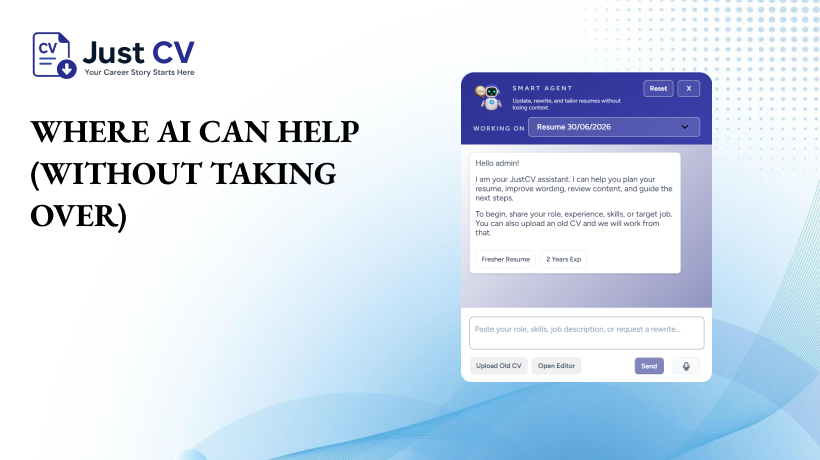
If you’re staring at a blank page and the words just won’t come, tools like JustCV’s AI resume builder can help answer the “how can I make a resume” question in minutes rather than hours suggesting phrasing for your summary, tightening a clunky bullet point, or reminding you of sections you might have forgotten. The important part is that the AI drafts and you decide: you’re still the one who knows your own story best, and every line should sound like you, not like a template. Think of it as a faster starting point, not a replacement for your judgment.
Frequently Asked Questions
How do I write a resume with absolutely no experience?
Start with contact information, then a short summary, then education, skills, and any projects, internships, or volunteer work you’ve done in that order. Every section leans on what you do have (school, projects, transferable skills) instead of a job history you don’t have yet.
How can I make a resume if I’ve never had a job before?
Yes, you can and it’s more common than you’d think. Build it around your education, coursework, and any hands-on activities like clubs, freelance gigs, or volunteer work, formatted the same way you’d format a job entry, with a role, dates, and a few result-driven bullet points.
Do I really need a summary if I have no experience?
Yes. A short summary helps a recruiter understand your direction in the first five seconds, before they’ve read a single bullet point. Skipping it means making them work harder to figure out what you’re going for.
Should coursework and personal projects really go on a resume?
Yes relevant coursework, class projects, and independent projects are standard, expected content for a first resume. They show initiative and practical skill even without a paycheck attached.
How long should a first resume be?
One page. With limited work history, you have more than enough room to cover education, skills, and a few strong project or internship entries without needing a second page.
What if I don’t have any internships or clubs to list?
Look for smaller things you might be underrating tutoring a sibling, running a small side project, freelancing on a single gig, or volunteering for a one-off event. Anything that shows initiative and a result can become a bullet point.
So, how do I write a resume from scratch with no experience? Start with what you actually have your education, your projects, your transferable skills and structure it clearly enough that a recruiter can see your potential in under a minute. That’s really the whole formula, whether it’s your first resume ever or your fifth draft this month.
Ready to put this into practice? Start with our https://justcv.io/ pick a template, and let the AI help you get your first draft down so you can focus on making it sound like you.