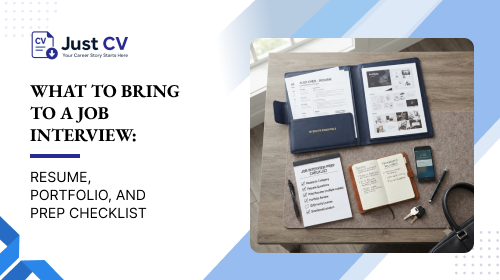
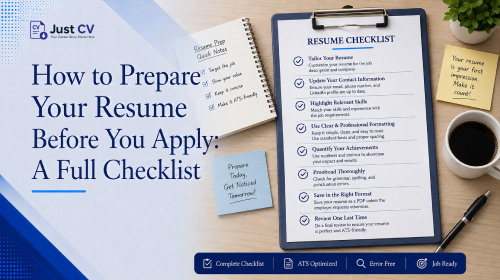
Bring an updated printed resume, a digital resume sample for job interview backup on your phone, a reference list, a notebook, and two or three prepared questions. Add a portfolio link if your field uses one. None of this needs special equipment just five minutes of prep the night before.
Here’s the short version, if you’re skimming before you walk out the door:
- Two printed copies of your current resume
- One digital copy saved to your phone (PDF, not a photo)
- A short list of references with contact details
- A notebook and pen for notes
- Two or three useful questions to ask the interviewer
- A portfolio link or samples, if relevant to your field
The rest of this guide covers why each item matters, what to prepare beyond the paperwork, and what to ask when it’s your turn to talk.
Why This List Looks Different From the Usual Interview Checklist
Most interview-prep articles cover interviews in general dress code, arrival time, handshake tips. That’s useful, but it skips a specific question: which resume-related materials should you actually carry, and in what format?
Search results for this topic tend to split two ways. Template-focused pages rank for interview-adjacent keywords but barely address the interview itself. General career-advice checklists cover etiquette broadly, but treat “bring your resume” as a single line, without saying how many copies, what format, or why a digital backup matters.
This guide sits in the gap between those two: resume-specific, interview-specific, and built as a checklist you can actually use.
Resume and Document Checklist
Print more than you think you need. Interviewers sometimes bring in a colleague at the last minute, and a spare resume avoids a scramble for the copier.
- Two to three printed resume copies – clean paper, no staples, one for you and extras for interviewers.
- A digital resume sample for job interview use – a properly exported PDF saved to your phone or email, in case anyone asks you to send it on the spot.
- A one-page reference list – name, relationship, phone, and email for two or three references, kept separate from the resume.
- A cover letter copy, if you submitted one, so your talking points stay consistent with what they already read.
- A portfolio or work-sample link (or printed samples), for design, writing, development, or other portfolio-driven roles.
- A notebook and pen – for names, follow-up questions, and anything worth referencing in a thank-you note.
- A government ID, especially for interviews inside secured office buildings.
None of this needs to be elaborate. Keep everything you may need in your bag, so you’re not searching through your inbox at the last minute.
Printed vs. Digital: What Actually Matters
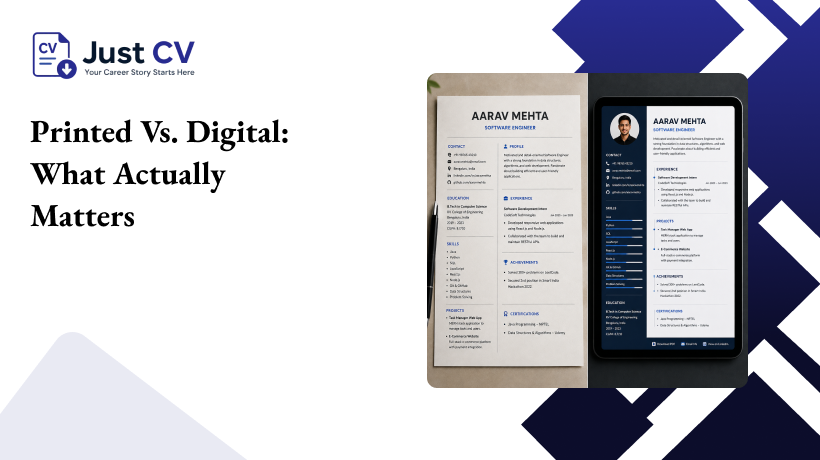
| Format | Best for | What to watch for |
|---|---|---|
| Printed resume | In-person and panel interviews, walk-in roles | Use clean, uncreased paper; skip staples so pages can be handed out separately |
| Digital PDF (phone/email) | Video interviews, last-minute requests, recruiter follow-ups | Export as a real PDF with selectable text – not a photo or scan – so it stays easy to read and forward |
| Portfolio link | Design, writing, development, and other sample-based roles | Test the link the morning of the interview so nothing derails momentum mid-conversation |
A resume built and exported through JustCV produces a clean PDF automatically, so the same file works whether you’re printing it at home or attaching it to a follow-up email – no reformatting required between the two.
What to Prepare Beyond the Resume
Documents are half the picture. The other half is what you carry into the conversation -and this is where the Agitation Doctrine matters most. An interview isn’t a test you pass or fail from memory. It’s a conversation, and preparation just means you’re not scrambling.
- A short story for your career narrative. Have a calm, 60-second version ready -not scripted word-for-word, just organized in your head.
- Two or three achievement examples, tied to the role, with a rough sense of the situation, what you did, and the result.
- An honest, calm answer for any gap or transition on your resume. A career break, a career change, or a first job with limited experience doesn’t need an apology- it needs clear framing. If you took time for caregiving, freelanced between roles, or switched industries entirely – that counts.
- Logistics sorted the night before: interview address or video link tested, parking or transit checked, outfit set aside.
- A short list of your own priorities – salary range research, questions about the team, or anything you want covered before you leave.
Questions to Ask Your Interviewer
Interviews run both directions. A few genuine questions signal real interest and give you information you need before accepting an offer.
- “What does success look like in this role after the first six months?” – clarifies expectations early.
- “Can you tell me more about the team I’d be working with day to day?” – surfaces culture and structure.
- What’s the biggest challenge you’re dealing with in this role right now? – shows that you’re thinking about real work, not just the offer.
- How does the team usually share and receive feedback?” – useful for gauging management style.
- What happens next, and when should I expect to hear from you?
Pick two or three that fit the conversation naturally, rather than reading through the full list. Jot them in your notebook so you don’t lose the thread mid-interview.
Building the Resume You’ll Actually Bring
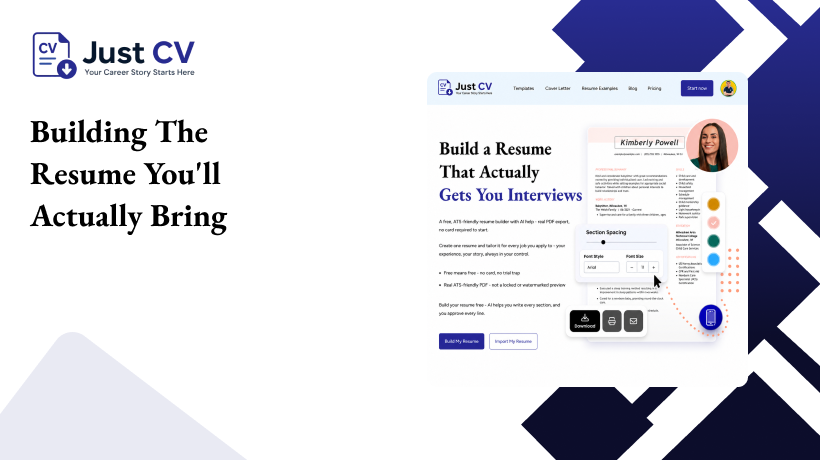
If you’re updating your resume for this interview, keep the same document consistent across every format: the printed copy, the digital resume sample for job interview follow-ups, and anything attached to a thank-you email afterward. A resume built in JustCV exports as a clean PDF with a real, selectable text layer (see the export feature on the JustCV homepage) -the same file works for printing, emailing, or uploading to an applicant tracking system, without version drift between copies.
There’s no need to have this fully polished weeks in advance. A calm, current version-updated the week before your interview covers what most interviewers will actually ask about.
Wrapping Up
Walking into an interview prepared isn’t about a perfect resume or a flawless script. It’s about removing small frictions a missing printed copy, an unreachable reference, a portfolio link that doesn’t load so you can focus on the conversation itself.
Build your resume with JustCV’s resume templates, export a clean PDF, and know it’ll work whether you’re printing it at home or sending it from your phone in the waiting room.
Download PDF
FAQs
How many copies of my resume should I bring to an interview?
Bring two to three printed copies, even for a one-on-one interview. Interviewers sometimes bring in a colleague or manager at the last minute, and having spares avoids an awkward pause while someone finds a printer.
Should I bring a printed resume if I already emailed one?
Yes. Interviewers don’t always print the version they were emailed, and having a clean copy on hand keeps everyone looking at the same document during the conversation.
What format should my digital resume sample for job interview use be?
Save it as a real PDF, not a photo or scanned image. A proper PDF stays readable at any zoom level and forwards cleanly if someone asks you to send it on the spot.
Do I need a portfolio if I’m not in a creative field?
Not usually. Portfolios matter most for design, writing, development, and other sample-based work. For most other roles, a clear resume and reference list cover what interviewers need.
What if my resume has a career gap or a career change?
Have a short, honest explanation ready caregiving, freelancing, further study, or a deliberate industry switch are all real experience worth explaining plainly, not apologizing for.
Should I bring references even if they weren’t asked for?
It’s a good habit. Keep a short, separate reference sheet ready in case it’s requested during or after the interview, rather than compiling one under time pressure.
Is it okay to bring notes into an interview?
Yes. A small notebook with your prepared questions and a few talking points is normal and shows preparation, not a lack of confidence.
How far in advance should I finalize my resume before an interview?
Updating it the week before usually works well recent enough to reflect your current experience, without last-minute rewriting the night before.
